Understanding Harmonic Reducers in Modern Industry
caulodepmb >> Uncategorized>> Understanding Harmonic Reducers in Modern IndustryUnderstanding Harmonic Reducers in Modern Industry
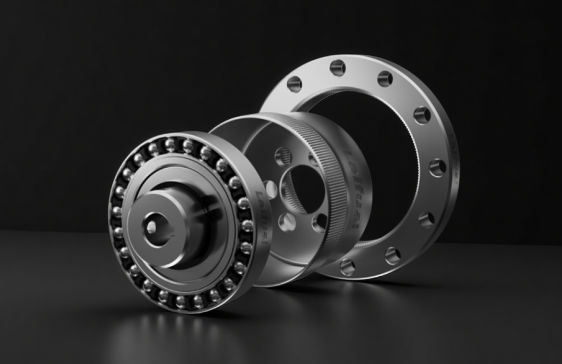
In advanced mechanical systems, precision is no longer optional. Across fields such as robotics, automation, and aerospace engineering, achieving accurate motion control while maintaining a compact design and high torque has become essential. For engineers and manufacturers seeking reliable motion control solutions, harmonic reducers provide an effective answer, offering valuable insight into how modern gear technology is shaping today’s high-performance systems.
What Is a Harmonic Reducer?
A harmonic reducer, also known as a harmonic drive or strain wave gear, is a specialized gear mechanism designed to deliver high precision and torque in a compact structure.
Unlike traditional gearboxes, this system operates using a flexible spline that deforms elastically under the action of a wave generator, allowing it to engage with a rigid circular spline. This unique design enables extremely high gear reduction ratios while maintaining smooth and accurate motion.
The result is a gearbox that provides near-zero backlash, high efficiency, and exceptional positioning accuracy, making it ideal for applications where even small errors can lead to significant performance issues.
Key Advantages of Harmonic Reducers
One of the main reasons harmonic reducers are widely adopted is their ability to deliver performance that conventional gear systems struggle to match.
Compact and Lightweight Design
Harmonic reducers achieve high reduction ratios in a much smaller footprint compared to planetary or cycloidal gear systems. This makes them especially useful in space-constrained environments such as robotic joints or precision instruments.
High Torque Density
Despite their small size, these reducers can transmit significant torque. This allows engineers to design lighter machines without sacrificing strength or performance.
Zero Backlash Operation
Backlash refers to the small gap between gear teeth that can lead to positioning errors. Harmonic reducers virtually eliminate this issue, ensuring accurate and repeatable motion.
Smooth and Quiet Performance
Because of their unique motion mechanism, harmonic reducers operate with minimal vibration and noise, which is essential in sensitive environments like medical devices or laboratory equipment.
Applications Across High-Tech Industries
Harmonic reducers are widely used in industries where precision and reliability are critical.
In robotics, they are essential for controlling robotic arms and joints, enabling smooth and highly accurate movements.
In aerospace, these reducers are used in satellite systems and positioning mechanisms, where compact size and reliability are crucial.
In medical equipment, harmonic drives help power surgical robots and imaging devices that require precise and stable motion control.
They are also found in industrial automation, including CNC machinery, assembly lines, and precision testing equipment, where repeatability and efficiency are key.
Why Engineers Choose Harmonic Reducers?
The shift toward automation and intelligent manufacturing has increased the demand for components that can deliver both precision and durability. Harmonic reducers meet this need by combining innovative design with proven mechanical principles.
Their ability to maintain accuracy over time, even under continuous operation, makes them a preferred choice for long-term industrial use. In addition, their high efficiency reduces energy loss, contributing to more sustainable and cost-effective systems.
Another important advantage is flexibility in integration. Harmonic reducers can be incorporated into a wide range of system designs, making them suitable for both standard and customized engineering solutions.
Choosing the Right Harmonic Reducer
Selecting the right reducer depends on several factors, including torque requirements, reduction ratio, installation space, and application environment. Engineers typically evaluate these parameters to ensure optimal performance and longevity.
A well-designed harmonic reducer should offer consistent output, minimal maintenance requirements, and compatibility with the overall system architecture.
Conclusion
As industries continue to demand higher precision, smaller footprints, and greater efficiency, harmonic reducers have become a cornerstone of modern motion control technology. Their unique structure, combined with outstanding performance characteristics, makes them indispensable in a wide range of applications.